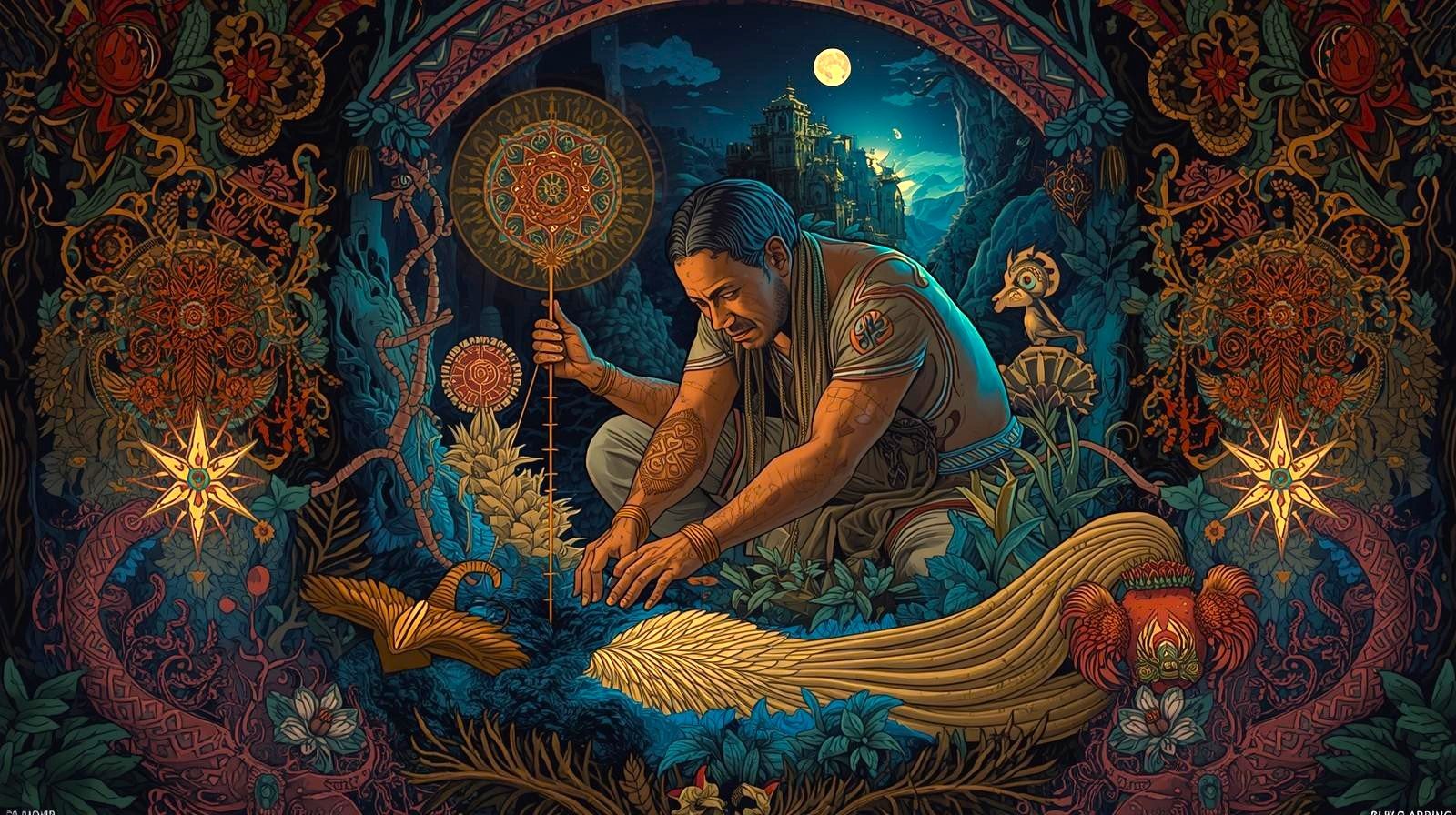

For many people interested in Amazonian plant medicine, attending an ayahuasca retreat can feel both exciting and mysterious. While the ceremony itself often receives the most attention, a well-structured retreat offers a much broader experience rooted in traditional healing practices, preparation, and personal reflection.
One example of this immersive approach can be found at retreats offered by Inin Jema, a Shipibo traditional medicine center in the Peruvian Amazon. Founded by renowned Shipibo healer Guillermo Arévalo Valera, the retreat center focuses on preserving and sharing Amazonian healing traditions through structured ceremonial experiences and small-group retreats.
For those curious about attending an ayahuasca retreat, understanding what to expect can help demystify the experience and provide a clearer picture of how these retreats are designed.
A Retreat Rooted in Shipibo Tradition
At its core, the retreat experience at Inin Jema is built around Shipibo traditional medicine, one of the most sophisticated plant medicine traditions of the Amazon.
The retreats emphasize immersion in this cultural healing system rather than simply offering individual ceremonies. Participants take part in a structured program that introduces them to traditional healing practices guided by experienced Shipibo healers.
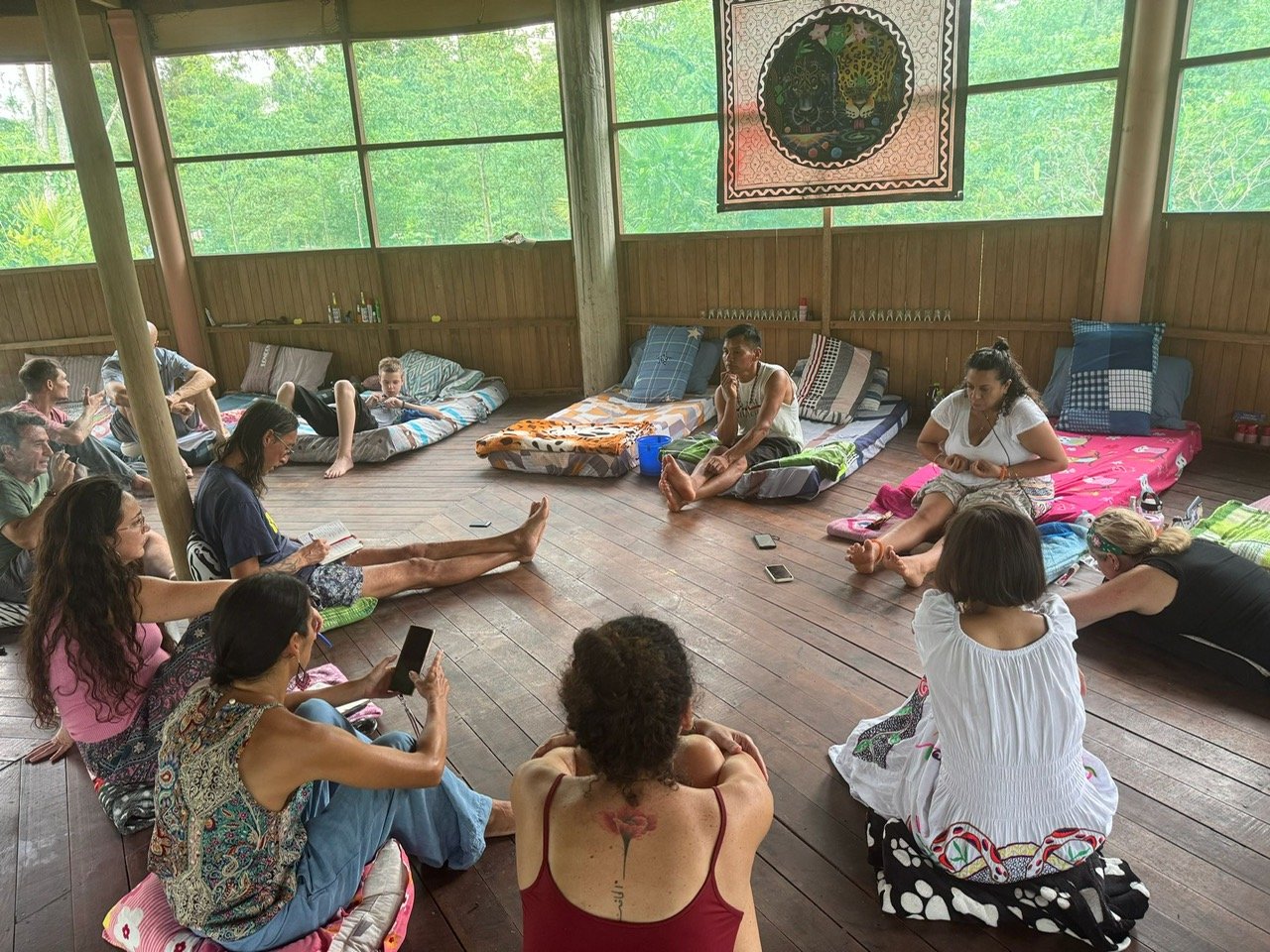
Groups are intentionally kept relatively small, typically with a maximum of around twenty participants, which helps create a more personal and supportive environment.
This smaller group structure allows facilitators to provide individual attention and helps maintain the ceremonial atmosphere that is central to Shipibo healing traditions.
Guided by an Experienced Shipibo Maestro
One of the most distinctive aspects of the retreat is the presence of a highly experienced healer guiding the ceremonies.
Maestro Guillermo Arévalo Valera, often known by the Shipibo name Kestembetsa, comes from a long lineage of Shipibo healers. Over decades of practice, he has studied hundreds of medicinal plants and completed extensive plant dietas in the Amazon rainforest to deepen his understanding of traditional medicine.
His work has extended far beyond ceremony leadership. He has also been involved in cultural preservation, establishing healing centers and advocating for Indigenous medicine internationally.
Having a retreat led by an experienced Shipibo maestro helps ensure that the ceremonies follow traditional protocols and are conducted within the cultural framework that has guided these practices for generations.
Immersion in the Amazon Environment
Another important element of the retreat experience is its setting.
Located near Pucallpa, the center places participants directly within the environment where Shipibo plant medicine traditions originated.
The surrounding rainforest plays a meaningful role in the retreat. Being immersed in nature helps participants disconnect from the distractions of everyday life and shift into a more reflective mindset.
Many retreats encourage participants to spend time walking in nature, journaling, or quietly observing the environment between ceremonies.
This natural setting supports the broader intention of the retreat, which is to foster introspection, connection, and personal reflection.
What Happens During the Ceremonies
Ayahuasca ceremonies are typically held at night and take place in a ceremonial space designed for quiet focus and safety.
Participants gather in the maloca, or ceremonial house, where each person has their own space with a mattress or mat. The ceremony begins with an introduction from the healer or facilitators, explaining the process and setting the tone for the evening.
After drinking the ayahuasca brew, participants sit or lie quietly as the effects gradually begin.
Experiences can vary widely from person to person. Some participants report vivid visual imagery, while others experience emotional insights, memories, or periods of deep contemplation.
Within Shipibo ceremonies, the healer plays an active role throughout the night by singing icaros, traditional healing songs used to guide the energetic flow of the ceremony.
These songs are believed to help support participants during the experience and direct the healing process.
The Role of Emotional Release
It is common for participants to experience various forms of emotional or physical release during ayahuasca ceremonies.
One well-known aspect of these ceremonies is purging, which may involve vomiting or other forms of cleansing. In traditional contexts, this is often interpreted as the body releasing emotional or energetic blockages.
While this aspect can sound intimidating, experienced facilitators help participants feel comfortable and supported throughout the process.
The ceremonial setting, combined with the presence of trained healers, creates a container where participants can safely move through whatever experiences arise.
Integration and Reflection
A meaningful ayahuasca retreat does not end when the ceremony concludes.
An important part of the process involves integration, which refers to reflecting on the experience and exploring how insights from the ceremony might influence daily life.
At retreats like Inin Jema, participants are often encouraged to spend time discussing their experiences, journaling, or speaking with facilitators about what they encountered during the ceremonies.
Integration helps transform the experience from a single intense event into a longer-term process of personal reflection and growth.
A Community Experience
Another unexpected aspect of attending a retreat is the sense of community that often develops among participants.
People attending these retreats come from many different backgrounds but share a common interest in personal exploration and healing.
Over the course of the retreat, participants often build supportive connections through shared experiences, group discussions, and time spent together in the natural setting.
This communal aspect can help participants feel less isolated during emotionally intense moments and often becomes one of the most meaningful parts of the retreat.
Approaching the Experience with Respect
Ayahuasca retreats are deeply connected to Indigenous traditions that have been practiced in the Amazon for centuries.
Centers like Inin Jema emphasize the importance of approaching these ceremonies with humility, respect, and openness to learning.
For many participants, attending a retreat is not just about the ceremony itself but about gaining a deeper appreciation for the cultural traditions and knowledge systems that have preserved these healing practices.
Final Thoughts
Attending an ayahuasca retreat can be a profound and transformative experience, particularly when it takes place within a traditional setting guided by experienced Shipibo healers.
Retreats at Inin Jema are designed to offer more than just ceremonies. They provide an opportunity to immerse oneself in Amazonian healing traditions, connect with nature, and explore personal insights within a structured and supportive environment.
For those considering such a journey, understanding what to expect can help remove uncertainty and encourage a thoughtful, respectful approach to one of the Amazon’s most enduring spiritual traditions.